1. Manas Wildlife Sanctuary, Assam
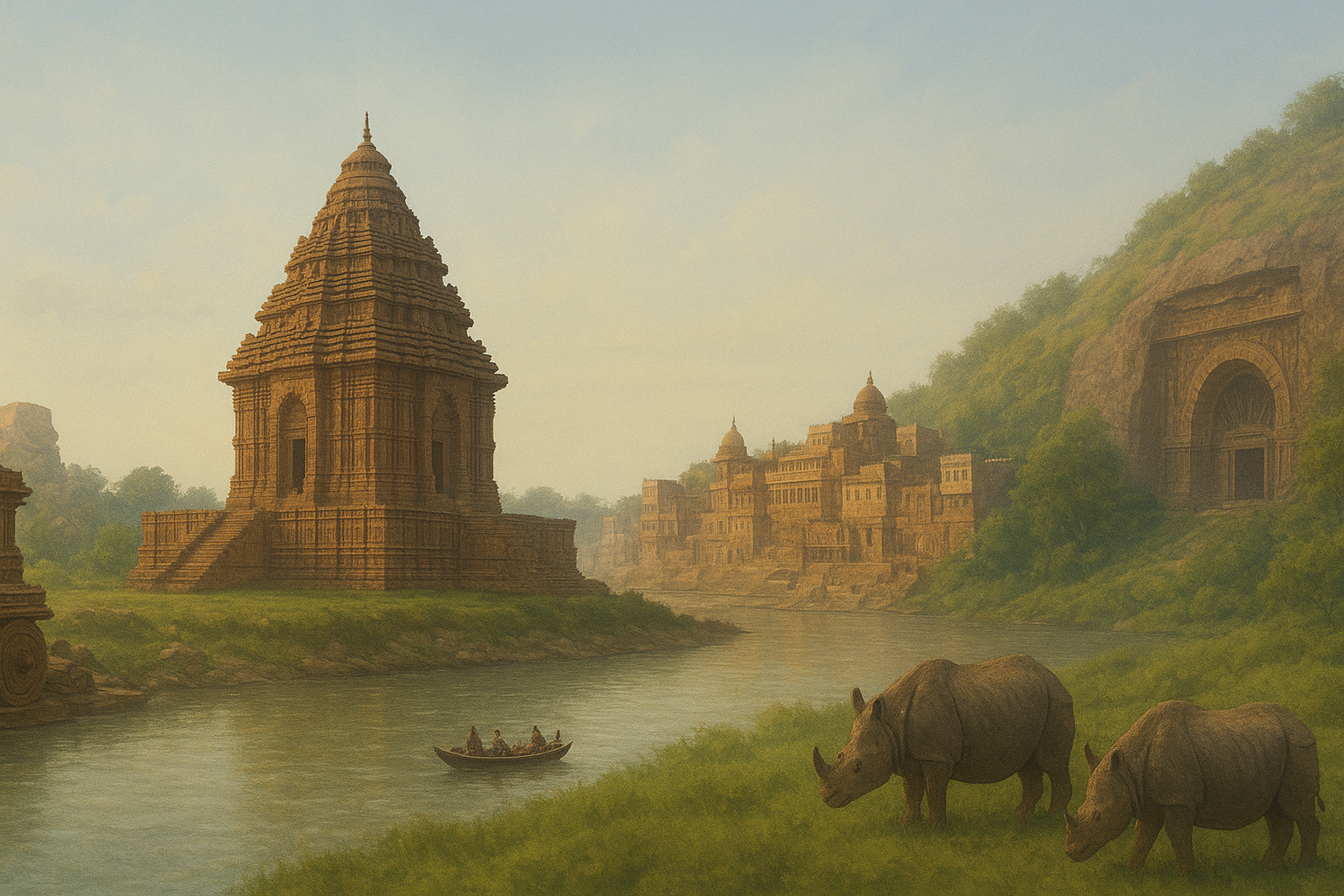
A lesser-known paradise in Assam, Manas is a UNESCO-listed tiger reserve and elephant habitat. Unlike Kaziranga, it is quieter and more raw. The sanctuary is also home to rare species like the golden langur and pygmy hog.
✨ Why UNESCO? Recognized for its outstanding biodiversity and status as a Project Tiger reserve, it shelters many endangered species.
✨ Must-Do: Jeep safaris, birdwatching trails, boat rides along the river.
Budget: ₹9,000 – ₹13,000
- Stay: ₹4,000 – ₹6,000 (eco-lodges/forest camps)
- Food: ₹2,500 – ₹3,500
- Travel & Safaris: ₹2,500 – ₹3,500
2. Ajanta & Ellora Caves, Maharashtra
These rock-cut caves near Aurangabad showcase India’s finest Buddhist frescoes, Hindu and Jain carvings. Ajanta is famed for its paintings, while Ellora boasts the Kailasa Temple – carved from a single rock!
✨ Why UNESCO? Ajanta for its unparalleled Buddhist paintings (2nd century BCE) and Ellora for architectural brilliance representing Hindu, Jain & Buddhist harmony.
✨ Must-Do: Explore caves with a guide, visit Daulatabad Fort, and stop by Bibi Ka Maqbara.
Budget: ₹7,000 – ₹10,500
- Stay: ₹3,000 – ₹4,000
- Food: ₹1,500 – ₹2,000
- Entry & Travel: ₹2,500 – ₹4,500
3. Khajuraho Temples, Madhya Pradesh
Known for their intricate sculptures, Khajuraho temples celebrate life, love, and spirituality. The carvings also depict yoga postures, mythology, and everyday life of medieval India.
✨ Why UNESCO? Represents an outstanding example of medieval temple architecture and expression of human creativity.
✨ Must-Do: Light & sound show, explore Eastern & Western groups of temples, local folk dance show.
Budget: ₹8,000 – ₹11,500
- Stay: ₹3,500 – ₹5,000
- Food: ₹2,000 – ₹2,500
- Entry & Travel: ₹2,500 – ₹4,000
4. Hampi, Karnataka
Once the capital of the Vijayanagara Empire, Hampi is like stepping into a time machine. The boulder-strewn landscapes and ruined temples tell stories of a golden past.
✨ Why UNESCO? Recognized for being one of the largest and richest cities of its time, showcasing Dravidian architecture and cultural prosperity.
✨ Must-Do: Virupaksha Temple, Vittala Temple’s stone chariot, coracle rides on Tungabhadra.
Budget: ₹7,500 – ₹10,500
- Stay: ₹3,000 – ₹4,000
- Food: ₹1,500 – ₹2,000
- Travel & Entry: ₹2,500 – ₹4,500
5. Sun Temple, Konark (Odisha)
Built in the 13th century, the Sun Temple is designed as a colossal chariot with intricately carved wheels, horses, and walls. It’s also part of Odisha’s “Golden Triangle” (Puri–Bhubaneshwar–Konark).
✨ Why UNESCO? It is a masterpiece of Kalinga architecture, symbolizing the Sun God’s chariot, reflecting India’s scientific and artistic genius.
✨ Must-Do: Visit during Konark Dance Festival, explore Puri Jagannath Temple & Chandrabhaga Beach.
Budget: ₹6,000 – ₹8,500
- Stay: ₹3,000 – ₹4,000
- Food: ₹1,500 – ₹2,000
- Travel & Entry: ₹1,500 – ₹2,500
6. Kaziranga National Park, Assam
Home to the world’s largest population of one-horned rhinoceros, Kaziranga is a wildlife lover’s dream. The park also shelters elephants, swamp deer, wild water buffalo, and migratory birds.
✨ Why UNESCO? Recognized for its unique natural environment and role in conserving endangered species like the one-horned rhino.
✨ Must-Do: Early morning elephant safari, jeep safari through central range, Assamese thali dinners.
Budget: ₹10,000 – ₹14,500
- Stay: ₹4,500 – ₹6,500 (resorts/eco-stays)
- Food: ₹2,500 – ₹3,500
- Travel & Safaris: ₹3,000 – ₹4,500
7. Jaipur, Rajasthan
The Pink City is full of royal charm – from forts and palaces to colorful bazaars. Jaipur is also part of the famous “Golden Triangle” circuit (Delhi–Agra–Jaipur).
✨ Why UNESCO? Recognized as a planned city combining Rajput, Mughal and Western urban planning traditions.
✨ Must-Do: Amber Fort light show, Hawa Mahal, Jantar Mantar, shopping in Johari Bazaar.
Budget: ₹7,500 – ₹10,500
- Stay: ₹3,000 – ₹4,000 (heritage stays available)
- Food: ₹2,000 – ₹2,500 (Rajasthani thali, street food)
- Entry & Travel: ₹2,500 – ₹4,000
8. Great Living Chola Temples, Tamil Nadu
The Chola dynasty temples – Brihadeeswarar Temple (Thanjavur), Gangaikonda Cholapuram & Darasuram – represent Dravidian architecture at its peak.
✨ Why UNESCO? They embody the Chola dynasty’s architectural innovation, spiritual traditions, and cultural impact in South India.
✨ Must-Do: Witness temple rituals, Carnatic music recitals, shop for Tanjore paintings.
Budget: ₹8,000 – ₹11,000
- Stay: ₹3,500 – ₹5,000
- Food: ₹2,000 – ₹2,500
- Local Travel & Entry: ₹2,500 – ₹3,500
9. Varanasi, Uttar Pradesh
The world’s oldest living city, Varanasi is deeply spiritual. The ghats come alive with evening aartis, sadhus, and pilgrims.
✨ Why UNESCO? Inscribed for its cultural significance as a spiritual and living heritage city, continuously inhabited for over 3,000 years.
✨ Must-Do: Ganga Aarti at Dashashwamedh Ghat, sunrise boat ride, silk weaving workshops.
Budget: ₹6,000 – ₹8,500
- Stay: ₹2,500 – ₹4,000 (guesthouses/ghat-view hotels)
- Food: ₹1,500 – ₹2,000 (chaat, kachori, thali)
- Local Travel & Boat Rides: ₹2,000 – ₹2,500
10. Mahabalipuram, Tamil Nadu
A seaside UNESCO gem, Mahabalipuram is known for its rock-cut temples and the Shore Temple right on the Bay of Bengal.
✨ Why UNESCO? The monuments are masterpieces of Pallava art, illustrating the development of South Indian architecture.
✨ Must-Do: Arjuna’s Penance, Five Rathas, Shore Temple sunrise, beachside seafood.
Budget: ₹7,500 – ₹10,500
- Stay: ₹3,000 – ₹4,000 (beach resorts available)
- Food: ₹1,500 – ₹2,000
- Local Travel & Entry: ₹2,500 – ₹4,500